These small-sized watercolours are my first impressions of my stay at the National Academy of Arts, Sofia. All of them were made in my studio during my erasmus program, and they picture the atmosphere and life in the atelier. Some of the paintings are more like a mesmeric, fictional image based on the place’s spirit.
Rock is my house, green meadow is my blanket - 22 July 2026
(Bakáts Bunker, Budapest, HU)


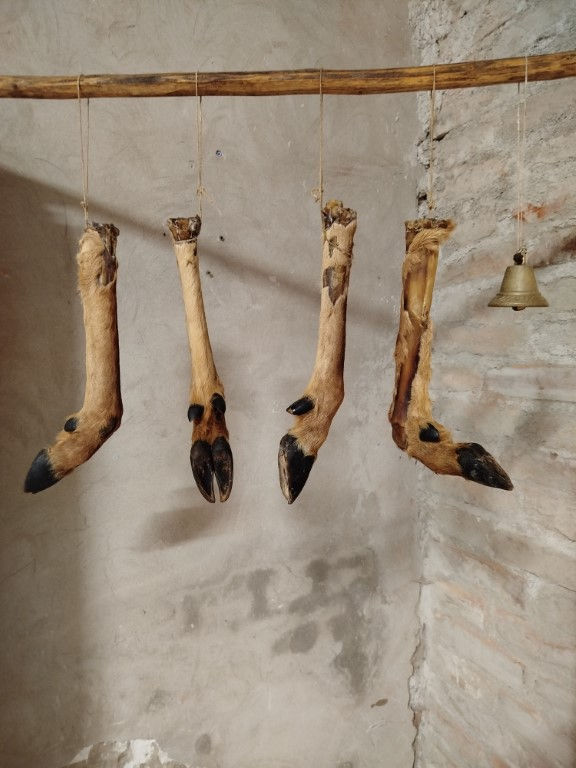


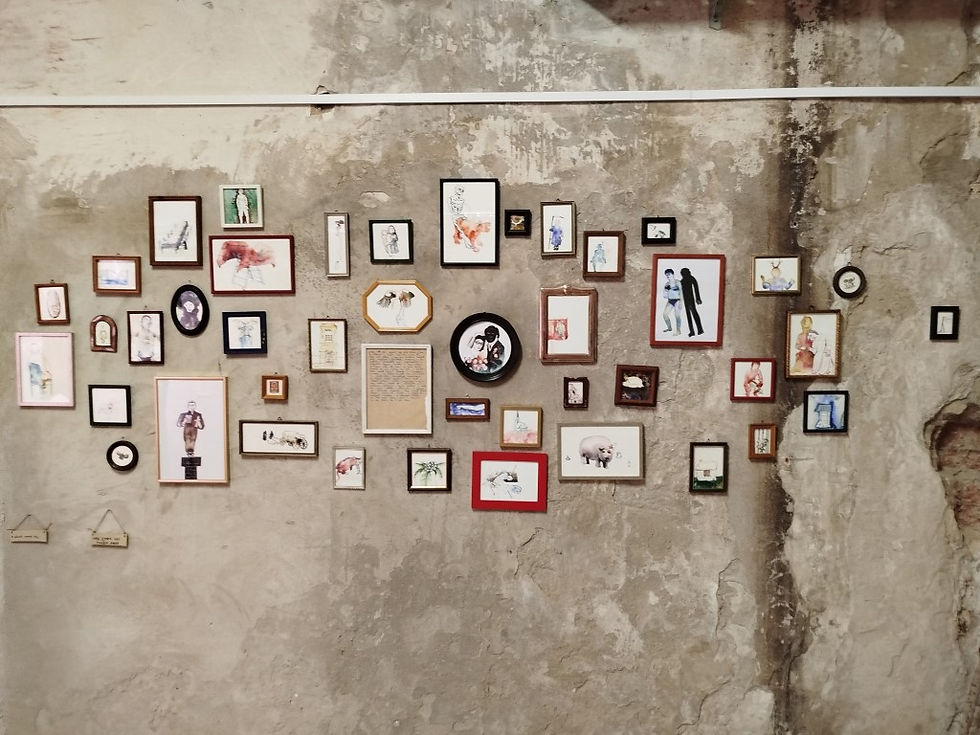


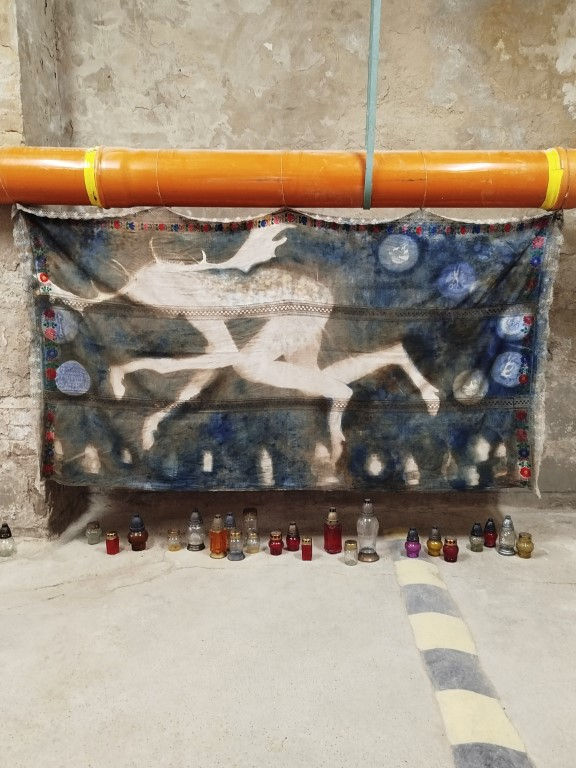
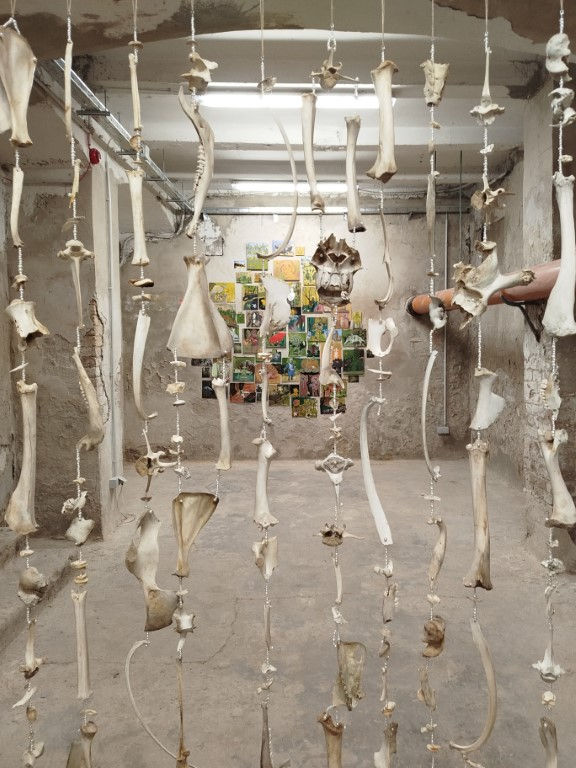


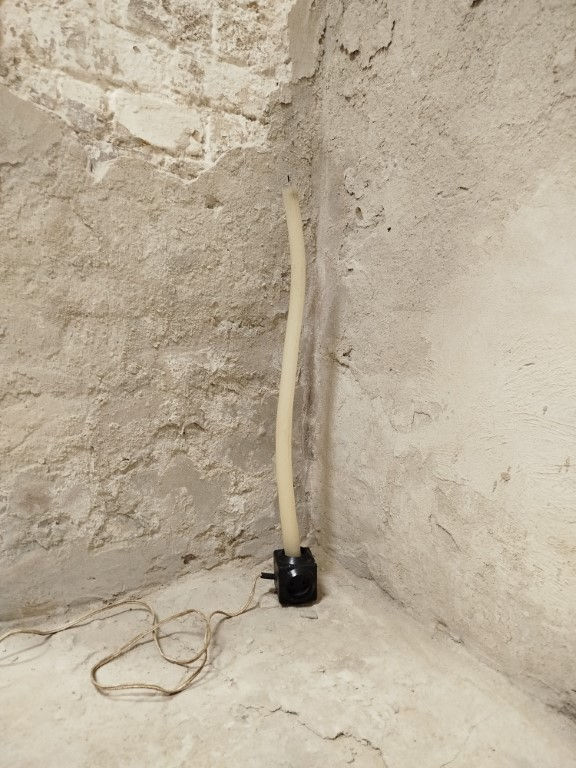


photos by Máté Varga, Gábor Mészáros and the artist
The exhibition explores superstitions, customs, material culture, and religious traditions surrounding death, as well as the collective and personal processes of mourning, interpretations of death itself, and conceptions of the afterlife. Death, however, is not presented as something dark or frightening, but rather as a natural, mysterious, and extraordinary event in life. The embeddedness of death within nature is reinforced by recurring animal and plant motifs, as well as by emphasizing nature-based conceptions and parallels of the afterlife. The materiality of the works also evokes motifs associated with death: ash, decayed wood, rusting objects, fragile ceramics that allude to the transience of the body, and shroud-like textiles whose tactile, organic qualities come to the fore. The harshness of death is softened by coping strategies that at times take the form of fairy tale-like, narrative storytelling, as well as by the temporality of the grieving process. In the exhibition, death simultaneously becomes an event from the past to be processed, a constant presence, and a promise of the future.
Commemoration of the dead unfolds on two levels. On the one hand, it is sustained by established rituals, the material and symbolic vocabulary of funerary culture, and those culturally embedded gestures that we can draw upon whenever we seek to express or experience the process of mourning. [...]
The second layer of remembrance is rooted in the personal. It takes shape through the recollection and preservation of of stories, habits, motifs, places, and objects associated with the deceased. In Bánkúti's works, these two symbolic systems merge into a distinctive, narrative, and mythical visual language that tells not only of the person who has passed away, but also of the process of mourning itself.
In coming to terms with death and mortality, it is significant that death can be understood as part of the cyclical processes of nature. Conceptions of the afterlife are likewise deeply intertwined with natural symbols and motifs. Across many religions, the world beyond is imagined as an indescribably beautiful and harmonious natural landscape: examples include Jannah in Islam, akin to the Christian Garden of Eden; Avalon, the island of eternal renewal and life in Celtic mythology; and the Elysian Fields of Greek mythology. Plants frequently symbolize eternal life, regeneration, and rebirth, while nature itself embodies an image of harmony.
In many cultures, forests are regarded as places where the human and supernatural realms intersect. Likewise, numerous animals have long been believed to serve as messengers between the living and the dead, particularly nocturnal birds such as owls and ravens. [...] It is these myths and superstitions surrounding the natural manifestations of the supernatural that Bánkúti explores in the works that most fully embody a sense of reconciliation with death.
excerpt from the exhibition texts of Luca Cserhalmi (curator and aesthete)
Three streets, three angels- 8 August 2025
(Dornyay Béla Museum, Salgótarján, HU)

exhibition view

exhibition view

exhibition view

exhibition view

exhibition view

exhibition view


exhibition view

exhibition view

exhibition view

exhibition view
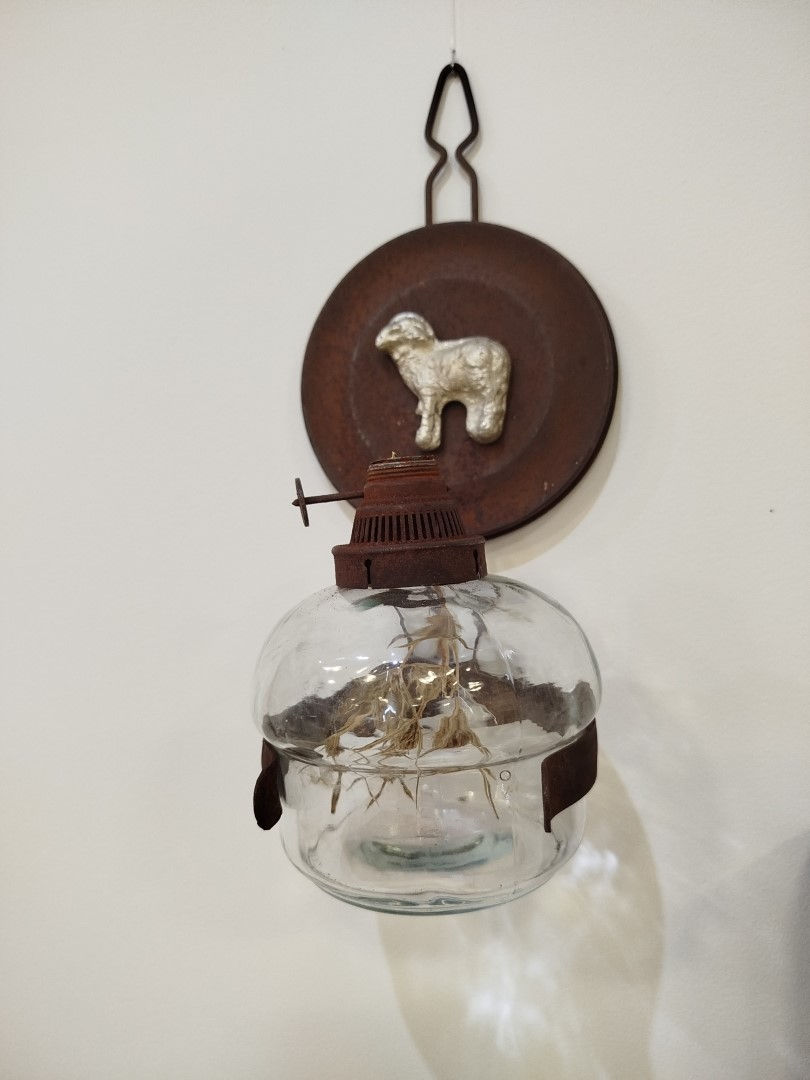
exhibition view

exhibition view

exhibition view

exhibition view

exhibition view

exhibition view

exhibition view
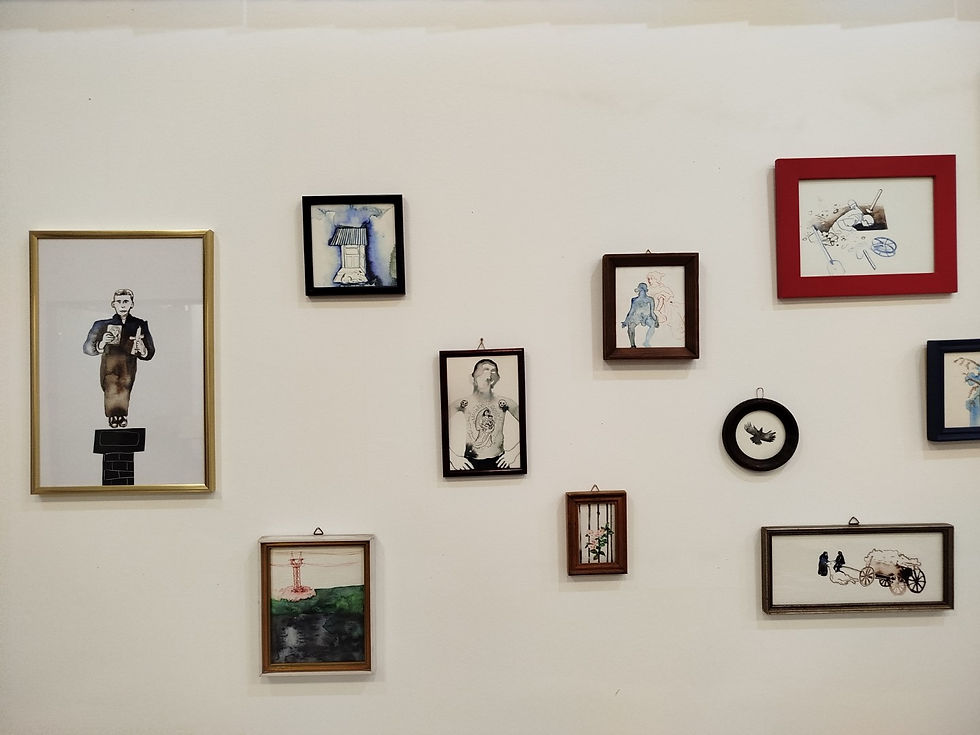
exhibition view

exhibition view

exhibition view

exhibition view

exhibition view

exhibition view

exhibition view

exhibition view

exhibition view

exhibition view

exhibition view

exhibition view
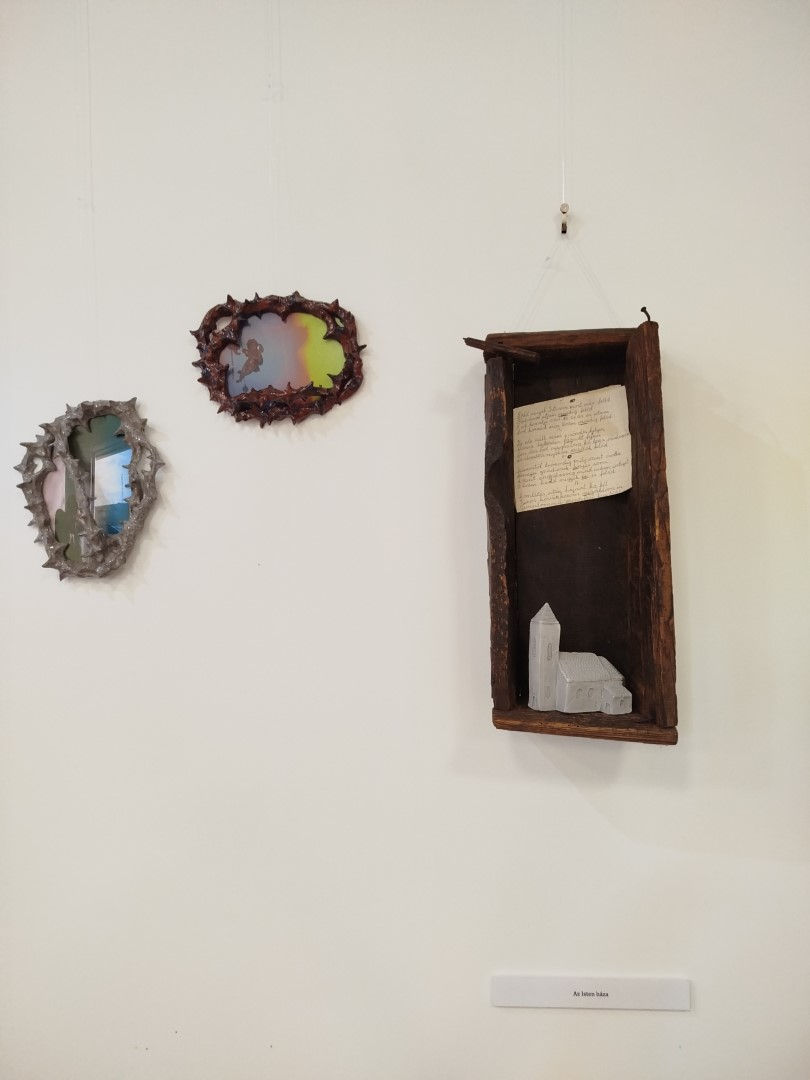
exhibition view

exhibition view

exhibition view

exhibition view

exhibition view

exhibition view

exhibition view

exhibition view

exhibition view

exhibition view

exhibition view

exhibition view

exhibition view

exhibition view

exhibition view

exhibition view

exhibition view
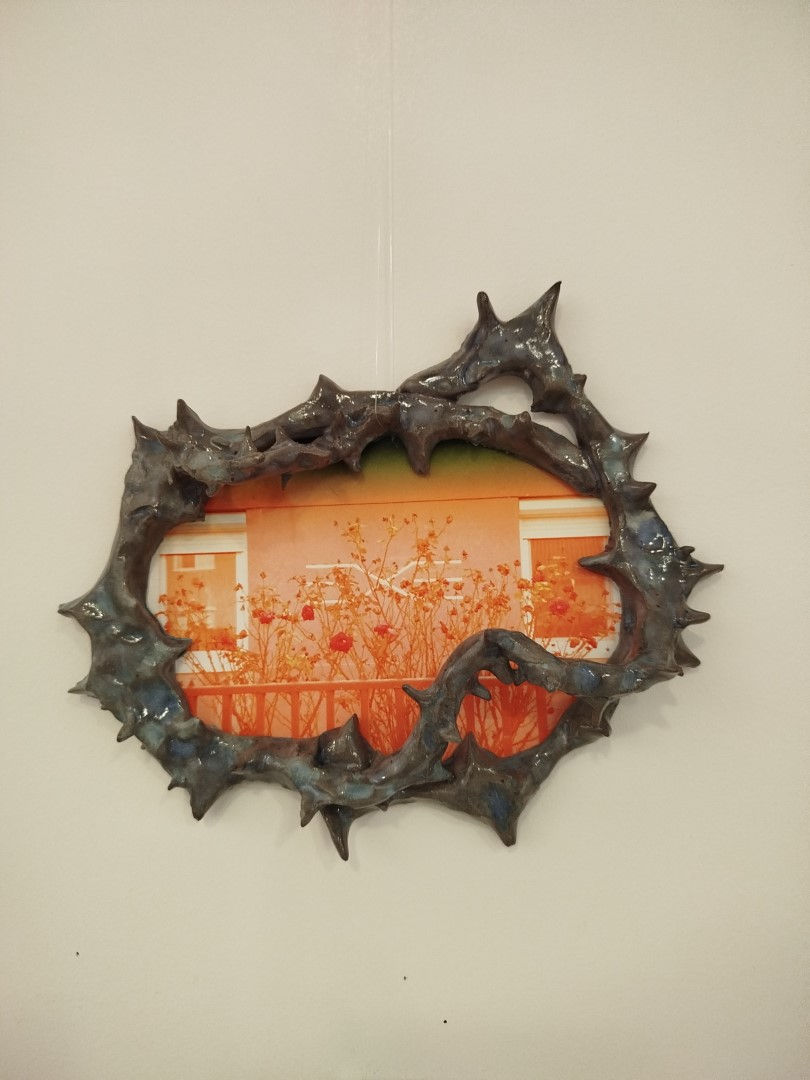
exhibition view
The exhibition “Three streets, three angels” deals with the theme of death, in fact it is the result of mourning work.
The title of the exhibition quotes a hungarian folk song from the Transylvanian Mezőség region, a lament in which a dead child is said goodbye, he says his farewells to his parents. The three angels in the title line are looking for the little boy to take with them. The song does not describe the unbearable state of mourning, but rather the difficult farewell and the neutral acceptance of death are reflected in it.
In addition to the motifs generally associated with death in the European cultural sphere, Bánkúti evokes the related world of Hungarian culture, while tying the whole together with his own system of symbols. There are such general motifs in his works as the tombstone, the candlestick, the angels – whether they are small souvenir statues or Giotto’s angels mourning Christ around a fallen deer, still floating above the ground on the celestial cord – the soul departing in the form of a bird, and memento mori symbols such as the clock, the scale on which we are measured at the hour of our death, or the bones that we leave behind on Earth. These motifs do not discuss the issue of life after death, do not explore the secrets of the transcendental world, but reflect a much more materialistic approach to death: one can almost feel the weight of the gravestone on them, the scent of the cemetery. They are not testimonies of eternal life, but rather of the experience of finity.
Death's shape-shifting qualities also appear in the exhibition: it can be not only a skeleton with a scythe, but also an angel, a stork or a weapon. It leaves behind everything that a person had to do with in life: clothes, a house, a bed, loved ones, even a cigarette butt. Bones, fragments. These things left behind later become relics, relics, as we see in the altar-like work Fence/To My Darling. The small vanities gain value and weave themselves into the lives of the deceased's relatives, weaving through and haunting the home like a spider's web. This left-behind home, haunted by loss constantly appears in Bánkúti’s works. The things the deceased loved to do, the house he built, that weighs like a burden on those he left behind, the roof tiles that he once buried under the shed.
A rich material culture, a system of symbols and tradition are reflected in most of the works, while the world of myths and rituals comes to the fore through a phenomenon experienced by everyone, the mourning process. Thus, the high-voltage poles next to the house became obelisks, and the father walking in the forest became a deer.
excerpt from the speech of Luca Cserhalmi (curator and aesthete)
Compagnons - 17 October 2023
(Nothburga Gallery, Innsbruck, AT)

enterior

enterior

enterior

enterior

enterior

enterior

enterior

enterior

enterior

enterior

enterior

enterior

enterior

enterior

enterior

enterior

enterior

enterior
The soil underfoot is enough for me - 29 May 2018
(Labor Gallery, Budapest, HU)

potato sculpture - altair

potato sculpture - crucifix

enterior

enterior

enterior

enterior

enterior

enterior

enterior - potato sculptures

enterior - potato sculptures

enterior

potato sculpture - guardian angel

potato sculpture - the heart of jesus

potato sculpture - holy water crucifix

video - lunch

potato sculpture - madonna


potato sculpture - holy family

potato sculpture - virgin mary
photos by Boglárka Zellei
Тhe exhibition is closely connected to the memory of my grandmother and her personal relation to religion. Besides my old works in different media, my most recent project was presented: a series of sculptures carved from potatoes.
Potatoes are tightly linked to agricultural work, especially in my home where our whole family took part in the process of growing. Eminently monotonous, this is a repetitive working procedure, a sort of meditation or a prayer.
In the life of the peasantry work and religion were always organic elements of life. On my grandmother’s shelf a lot of religious relics could be found: crucifixes, pictures of saints and figures of Virgin Mary. Copying these relics into potato sculptures I try to preserve memories of a life in which work and religion composed an inseparable unity.
I inherited a pigeon heart - 26 January 2017
(Telep Gallery, Budapest, HU)


"I will not tear myself away." My hand is in his hand. I wander together with him To every beautiful place. He makes me the first of maidens, Nor does he grieve my heart.

She wears a signet ring and has a lotus in her hand. I kiss her before everyone that they all may see my love. She enraptures my heart, and when she sees me, I am refreshed.

The stables are ready for him while horses are waiting at the stations The chariot is already harnessed— no time to rest on the way. Only on reaching his sister’s house will he will be truly happy.

Come to me, let your beauty be seen, let father and mother be glad. Call all my people together in one place, let them shout out for you, brother.


I am to you like a bit of land, With each shrub of grateful fragrance. Lovely is the water-conduit in it, Which your hand has dug, While the north wind cooled us. A beautiful place to wander, Your hand in my hand


I wish I were her Nubian slave who guards her steps. Then I would be able to see the colour of all her limbs!


